
Venus as a boy
On Guillermo del Toro's Frankenstein (2025)

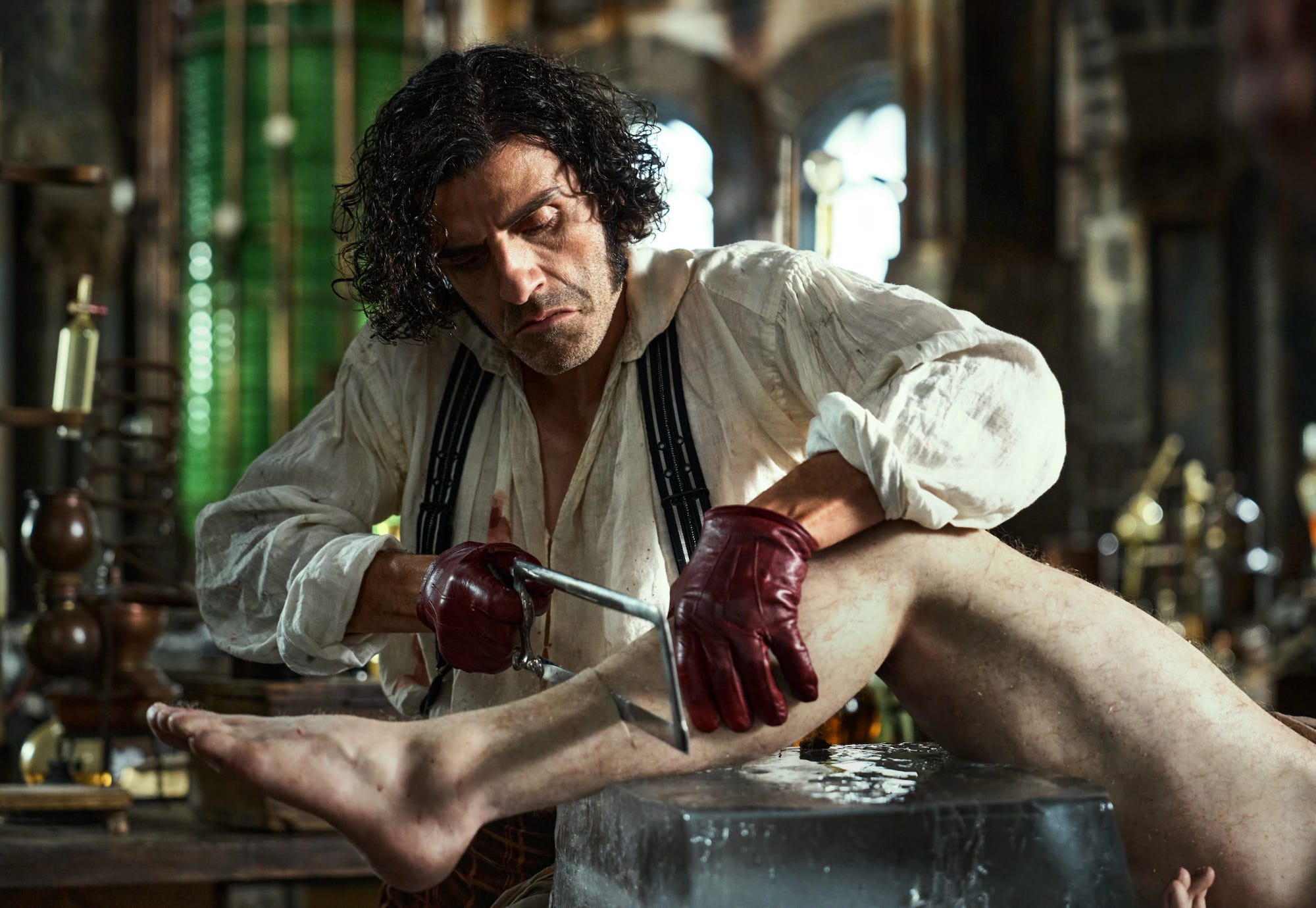
Like so many other people, I hastened to the earliest possible screening of del Toro’s much-anticipated Frankenstein. I came armed with the knowledge that the costumes and production desgin would be superb, and that the film contained many actors whose performances I admired. But quite honestly, I found del Toro’s Pinocchio (2022) utterly unwatchable, and Crimson Peak (2015) looked incredible but was in fact quite silly. I never quite got over The Shape of Water’s (2017) nickname (Grinding Nemo) and found it a bit too sentimental. I admired Cronos (1992) and Pan’s Labyrinth (2006), and enjoyed both his Hellboy films (2004, 2008). So, I was fully prepared for del Toro’s Frankenstein to be a bit of a mixed bag.
I must congratulate the set, props and design team for the huge amount of time they surely spent combing the archives of Europe’s anatomy museums. As a boy, Victor (Christian Convery) toys with a small ivory venus with a removable stomach panel. This beautiful and gruesome object forms part of the strict medical education imposed by his father, Leopold (Charles Dance). This early immersion in the sciences departs from Mary Shelley’s novel, making Victor into someone who is determined to surpass his father’s genius. Moving a substantial portion of the story to Edinburgh and its famous medical school, it is here that Victor attends and is expelled for his blasphemous and unethical experiments. Enter Heinrich Harlander (Christopher Walz, who is perfect here) Elizabeth’s uncle and an arms dealer willing to finance Victor’s elaborate plans. It is with Harlander’s blood money that the lab is built to Victor’s exacting standards, but we are constantly reminded of the filthy reality of Victor’s work by the presence of his oxblood leather gloves, as if he wears this blood as a badge of honour.
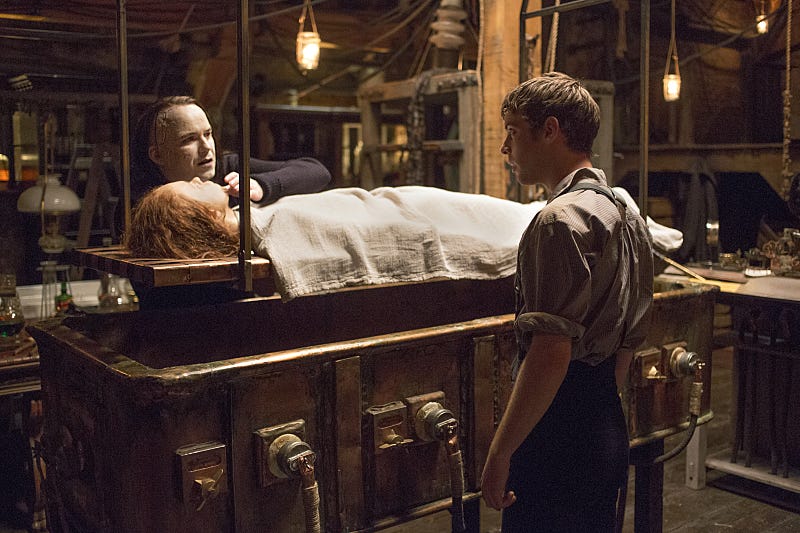
Victor’s lab is built inside an old water processing plant, and alongside huge, glowing battery towers, a carved Medusa head looms. I imagine that this lab smells like blood, old stone, damp, singed wires, sweat. When Victor briefly takes a bath, the air might be suffused with camphor. This is a film crammed to the teeth with references and symbols. There are echoes of the labs of Rocky Horror Picture Show, of the James Whale Frankenstein films, of Flesh for Frankenstein, and of Penny Dreadful. There are elaborate dissections that evoke Eyes Without a Face and the detailed mise-en-scene of Bryan Fuller’s Hannibal series.
Frankenstein and its screen afterlives has long been a professional interest of mine (I recently realised I had been teaching it for nearly twenty years!) so I come to it with a lot of experience. It is easy to make Frankenstein ornate and over the top (*cough* looking at you, Kenneth Branagh) but not so easy to do something that hasn’t been done before. The last time I was truly surprised by a Frankenstein adaptation was John Logan’s intelligent and layered neo-Victorian portmanteau series Penny Dreadful (2014-2016), with its astonishing performance from Rory Kinnear as Victor’s first creature, and Billie Piper’s thrilling Brona Croft/Lily Frankenstein, as one of the things that series did was to unfurl and expand the idea of a bride of Frankenstein.
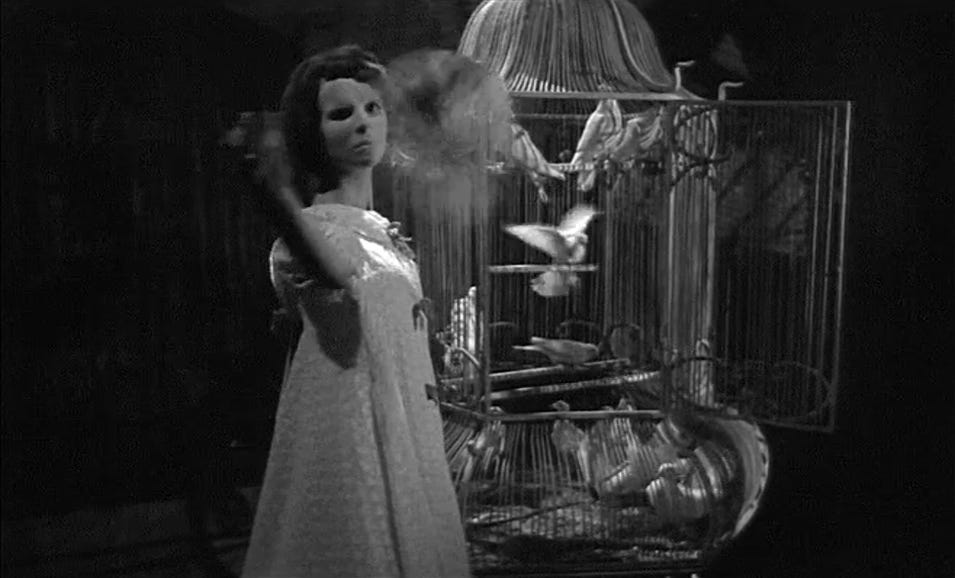
Other front-runners for me are Georges Franju’s starkly beautiful Eyes Without A Face/les yeux sans visage (1959), with a largely silent, masked performance from Edith Scob as the Creature figure. I was pleasingly surprised to find that Jacob Elordi’s performance in del Toro’s Frankenstein was something very physically subtle, driven by both the body and the eyes in the way of Scob’s performance. People always think of Karloff’s Creature or even Elsa Lanchester’s Bride and they are of course important signifiers in the history of how Creatures have moved on screen. But it is Scob’s elegant tragedy, her mastery of the luminous stare that makes Eyes Without A Face one of the greatest sincere Frankenstein films.
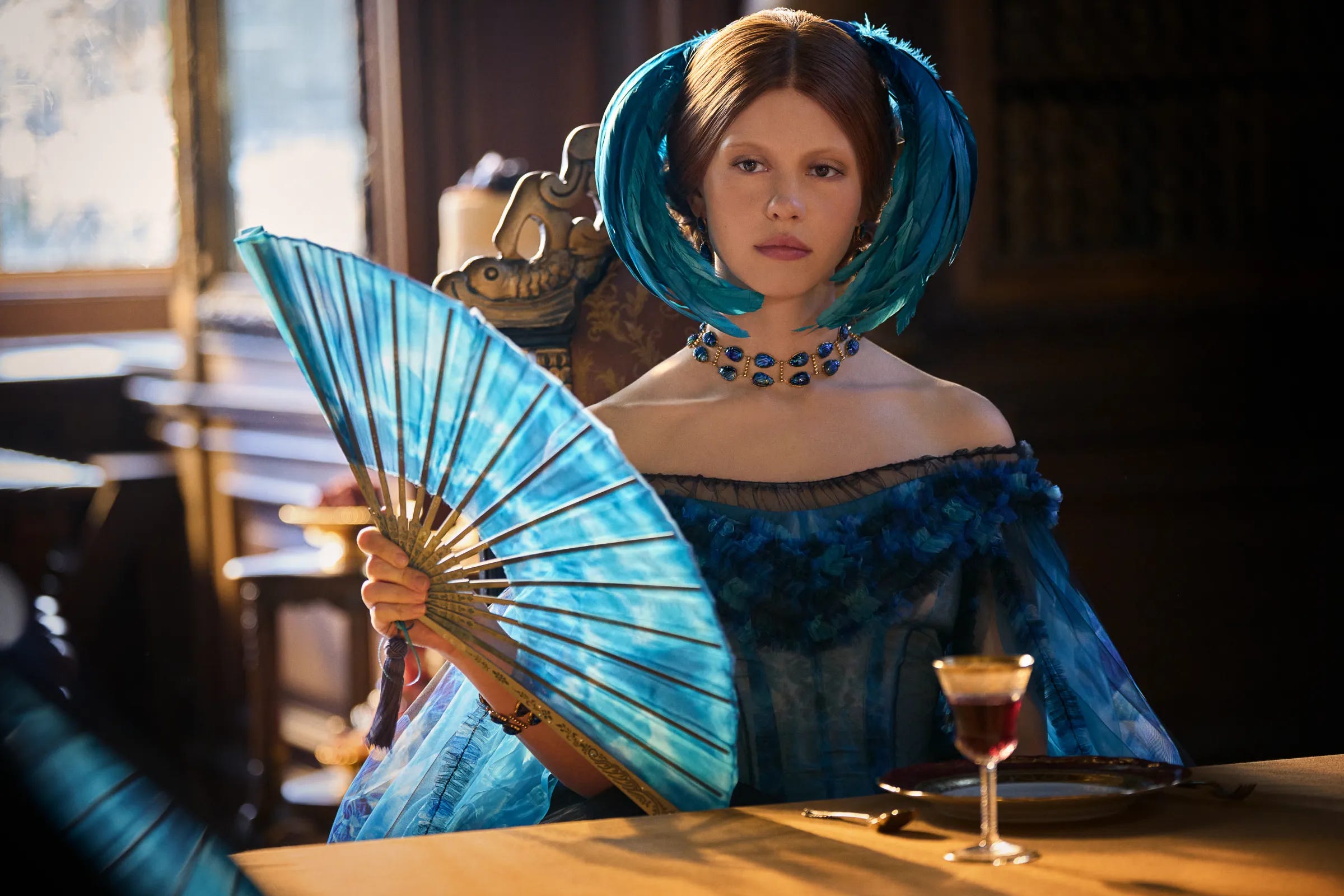
Del Toro has also made a sincere Frankenstein film, and this is driven by the expansion of Elizabeth’s (Mia Goth) character and by Elordi’s Creature. Mia Goth’s performance as Elizabeth is of course layered by her numerous other horror roles, particularly the complex and collaborative work she has done with Ti West. Her Elizabeth is reserved, but intelligent, perhaps much closer to an adaptation of Mary Shelley herself, with her passionate curiosity about the inner workings of the body. We first meet her encased in deep turquoise feathers and taffeta, holding a skull from her uncle’s momento mori photoshoot.
Later, we find she has a deep curiosity about the insect world, and that she is far from disgusted by Victor’s dissections. In some ways, I was reminded of a long forgotten A.S. Byatt adaptation, Angels and Insects (Philip Haas, 1995), where entomology and human biology also intersect. It is Elizabeth who first establishes a tender connection with the Creature, finding him by accident in the basement of Victor’s lab. Elordi’s Creature is physically strong, and while verbally limited, his gestures indicate a higher intelligence and curiosity. It is also hard not to see the Creature as beautiful, played by the actor whose two most recent roles have traded on his physical allure as Felix in Saltburn and Elvis in Priscilla. But beyond Elordi’s physical beauty, the Creature here also resembles a marble sculpture, recalling Cellini’s Perseus with the head of Medusa.
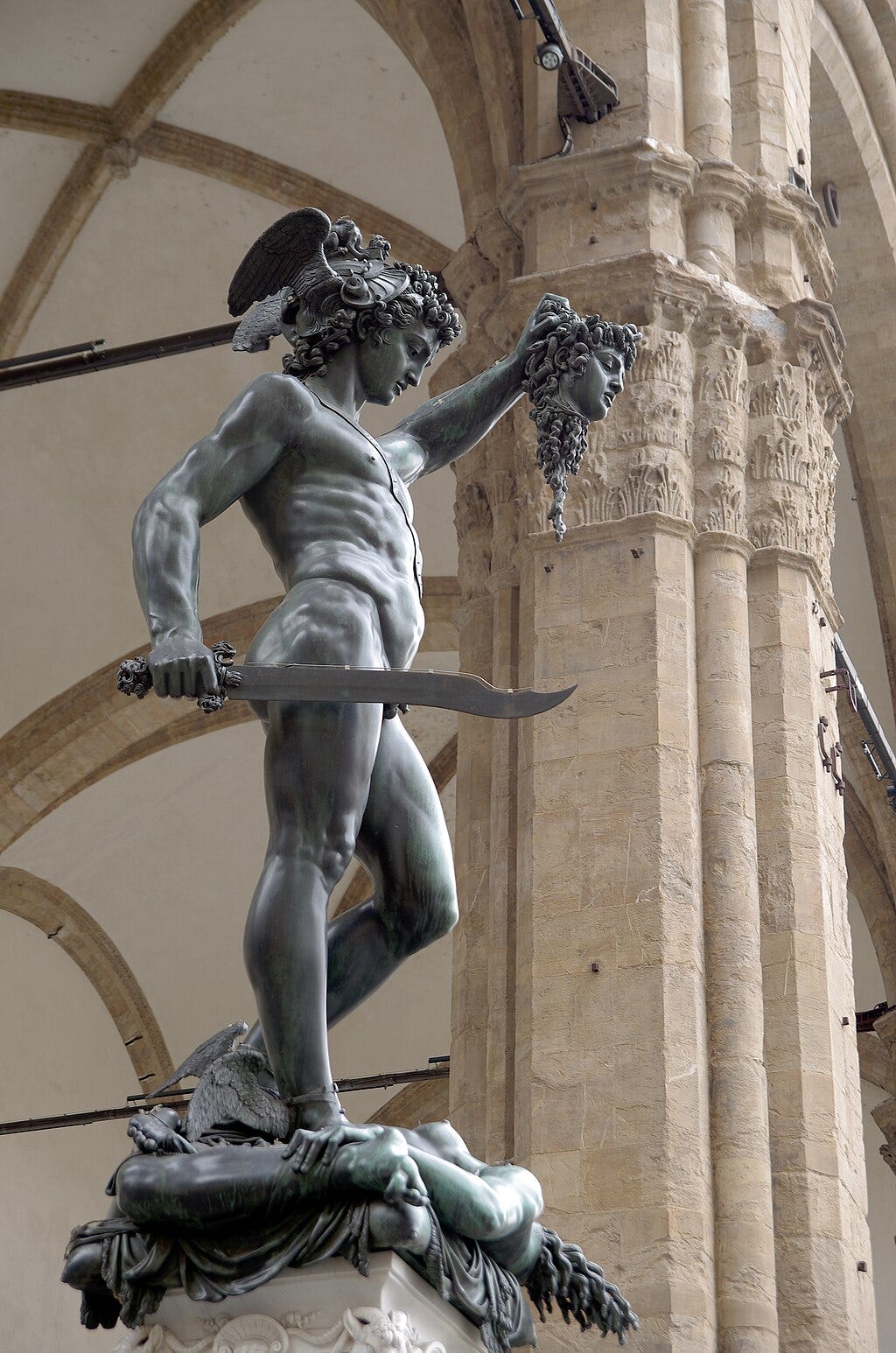
The Creature offers Elizabeth a single leaf, which she accepts with pleasure and keeps pressed inside a book. Later, when the Creature appears on Elizabeth’s wedding day, she embraces him like a lover. There is a real intensity to the gestures that Goth and Elordi bring to these roles, and to their few shared moments on screen together. This is perhaps the film’s most interesting twist on Frankenstein’s legacy, to have the Creature and the Bride realise that they are the ones who have the most in common in this story.